

Introduction
Are you offering crypto services, running a crypto exchange, selling cryptocurrencies and tokens, or building an affiliate website in the crypto niche? If you hope to rank on the first page for your target queries, you need to show Google and other search engines that you’re providing meaningful content and services.
Google assumes that reputable websites will receive backlinks from other trustworthy sites. The more backlinks a website accrues from well-established domains the better its chances of ranking well.
In this article, we will discuss proven crypto link building techniques, how to plan your link building campaign, and what to avoid when building links in the crypto niche.
The Importance of Link Building for the niche of Cryptocurrency Websites
Crypto link building is all about acquiring links from reputable and relevant sources to bolster the authority of any website in the cryptocurrency niche. Links are important as every inbound link serves as a vote of confidence. Consequently, search engines check for backlinks to assess if a crypto project is well-trusted, credible, or well-known.
So, what’s the importance of building links in the crypto industry? Here are the main reasons:
- It can boost the volume of organic traffic for crypto companies as their rankings for target keywords improve on search engines;
- Backlinks can help increase the credibility and trustworthiness of a project if it receives referrals from established projects or trusted companies;
- Referrals from domains where your target audience spends their time can improve the reputation of a project and attract more investors;
- link building techniques like guest posting, outreach blogging, and working with niche influencers can be an avenue for building relationships with other projects in the niche.
Big crypto websites are notably spending huge budgets for their own link building. That’s because it’s increasingly important to rank high on search engines as it can improve the buy-in for a project and create a wave of new users. Running crypto ads is also becoming expensive, competitive, and more restrictive.
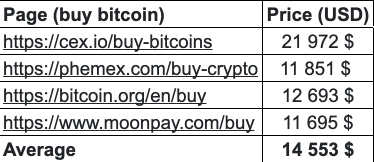
Screenshot caption: Comparative analysis of the funds invested to promote the “buy bitcoin” cluster (Excluding costs for content and work of specialists).
Best Link building Strategies for Crypto Websites
Guest Posting
Guest posting is an outreach link building strategy that involves writing and publishing an article on relevant websites that accept guest post submissions. It’s not just an opportunity to earn a link. Guest posts can showcase your expertise, promote your services, or share newsworthy things you did.
Not all guest posting opportunities are equal. You need to ensure that the website you are guest posting on provides a do-follow link that passes SEO value to the page.
While guest blogging can generate high-quality backlinks for your crypto website, it takes time and effort to find authoritative websites, pitch ideas, create content, and edit the blog post to match the site’s quality guidelines.
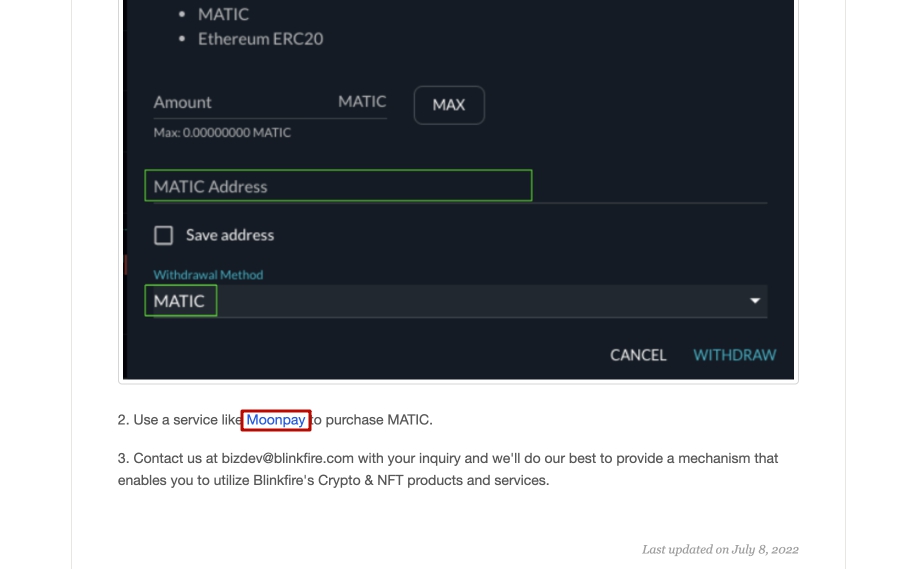
Screenshot caption: Outreach link of the Moonpay.
Link Insertions
Link insertions are a great way to build backlinks for your website. Unlike guest posting or article submission, the link insertion technique is more assured as you place links on published articles with existing authority. You can find relevant articles in your niche and insert your link naturally within the content.
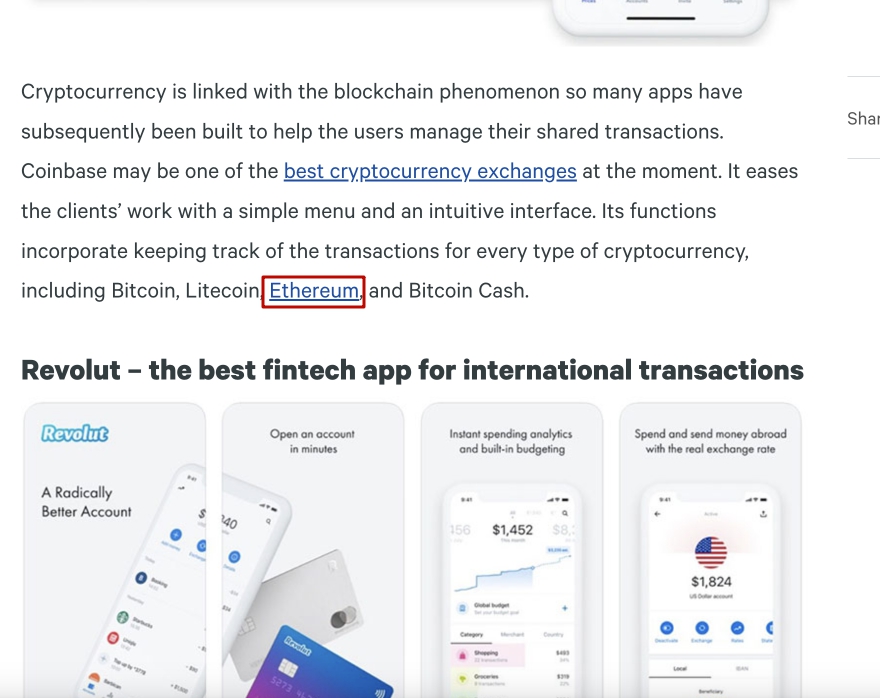
Screenshot caption: An example of an organically inserted link in an existing article.
Linkable Assets
People will naturally link to and share valuable pieces of content. The content can be anything from infographics, guides, tools, videos, podcasts, or even quizzes.
Creating linkable assets is a cost-effective way to generate more backlinks for your crypto website as it doesn’t require outreach. You can better utilize the resources that would be spent on broken link building with this technique. Still, the linkable assets must be promoted adequately to spark a buzz.
Infographics
Infographics generate lots of links because they are visually engaging and easy to share. You can create an infographic to showcase the values of your project, how it works, unique features, or the problems you hope to solve creatively. After creating the infographic, you can follow some tips to increase its exposure and link value:
- Make your infographic fully linkable to obtain an editorial link from the source that embeds your infographic;
- Submit your infographic to directories such as Cool Infographics, Daily Infographic, and Visually. The sites collect and showcase infographics on various topics and provide a link back to your website;
- Publish your infographic under creative commons licenses that require attribution, allowing other websites to use your infographic on their site, as long as they credit and link back to your website.
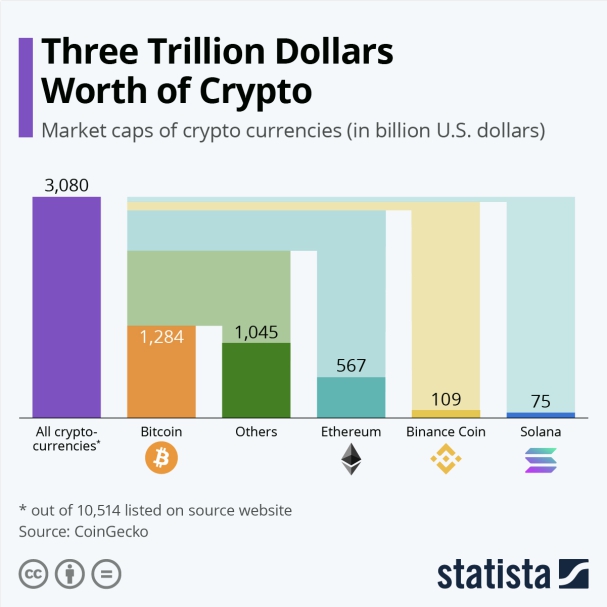
Screenshot caption: Example of infographics on Statista.
Unlinked Brand Mentions
One of the best ways to take advantage of low-hanging linking opportunities is to find unlinked brand mentions on other websites. These are occurrences where others have mentioned your brand name or services but have not linked to your own site.
The technique involves reaching out to the site administrators and politely asking them to add a link back to your site.
This method has a high chance of success if the site owners are sympathetic and appreciate your brand. It can be a win-win situation: you get a valuable backlink, and you can promise to consider future linking opportunities touching on what they do.
Screenshot caption: Mentioning the Bitcoin brand without an anchor link.